
Back
HRMS Application
Shift Management
COMPANY
Mewurk Technologies
ROLE
UX/UI Designer
YEAR
2023
In today’s evolving workplace landscape—marked by hybrid models, flexible roles, and remote teams—effective shift management is more critical than ever. Organizations must not only accommodate diverse work patterns but also ensure compliance with labor laws, minimize scheduling conflicts, and maintain operational efficiency. A well-designed shift management system empowers HR teams, supports employee well-being, and keeps businesses running smoothly without the chaos of manual processes.
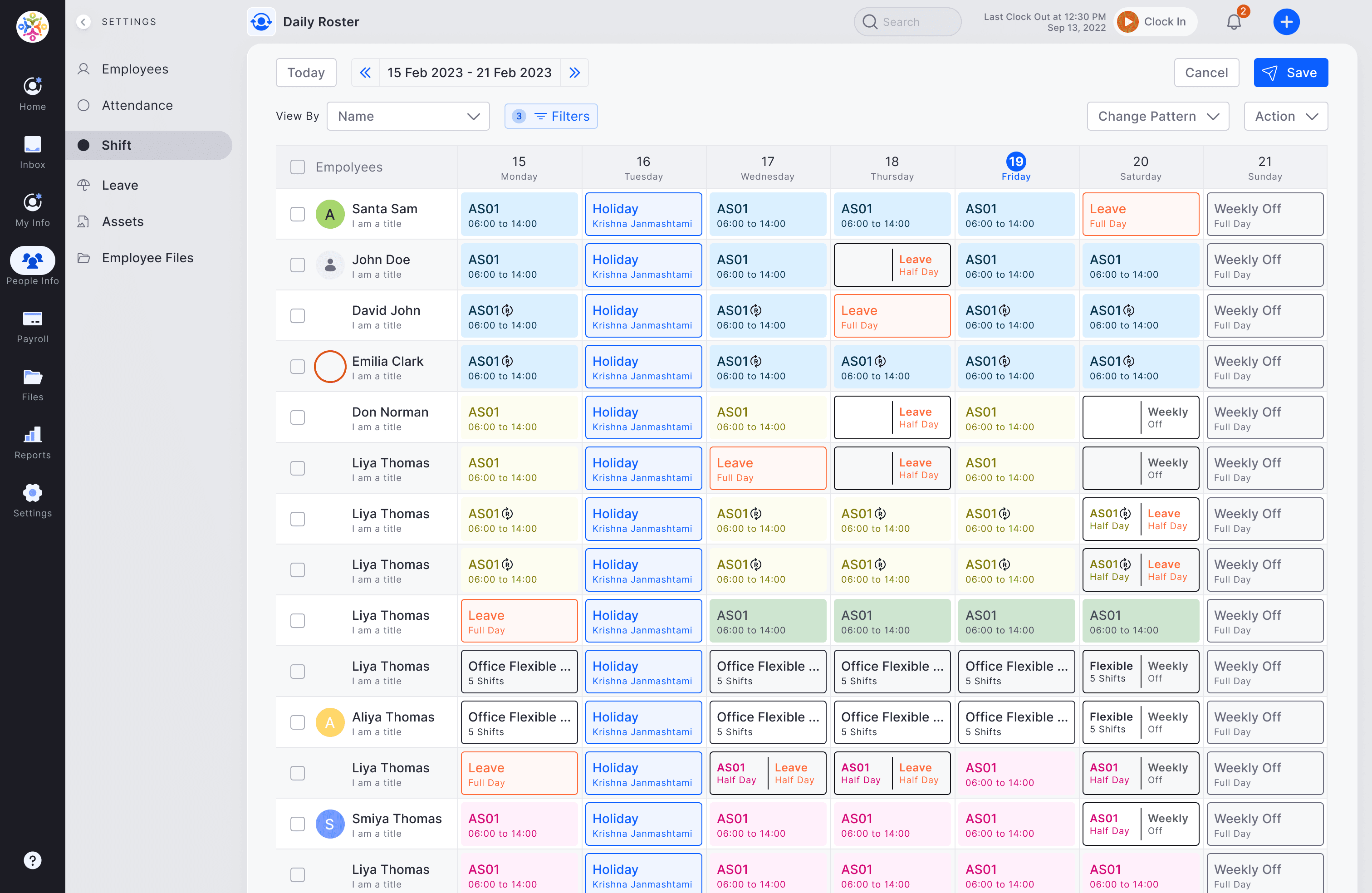
Problem Statements
Complex Shift Pattern Management
Problem: Organizations lack effective tools to manage diverse shift patterns across multiple departments and work environments, resulting in administrative burden and operational inefficiencies.
Impact: HR teams spend excessive time on manual shift management, struggle with department-specific requirements, and cannot easily adapt to changing business needs.
Error-Prone Manual Processes
Problem: Current manual shift management processes are vulnerable to human error at multiple stages, from creation to assignment and monitoring.
Impact: These errors lead to scheduling gaps, overstaffing, incorrect time calculations affecting payroll accuracy, and ultimately increased operational costs.
Poor Shift Communication
Problem: Employees receive inadequate or unclear information about their shift schedules, changes, and implications, with limited opportunity for input.
Impact: This causes decreased employee satisfaction, engagement, and productivity, while increasing absenteeism and turnover due to scheduling frustrations.
Labor Law Compliance Challenges
Problem: Organizations struggle to ensure shift schedules comply with varying labor laws across jurisdictions, especially regarding working hours, breaks, and overtime.
Impact: This exposes companies to legal risks, potential penalties, and compliance failures that could damage their reputation and financial standing.
Lack of Real-Time Visibility
Problem: Current systems provide limited real-time visibility into shift coverage, attendance tracking, and performance monitoring across the organization.
Impact: This prevents timely decision-making, creates delayed responses to attendance issues, and frustrates both managers and employees who need immediate shift information.
Goals
Our goal is to develop a comprehensive and intuitive shift management solution that transforms how organizations handle their workforce scheduling needs by:
Versatility
Enable creation of multiple shift types (Rotational, Flexible, Fixed, Hybrid)
Accommodate department-specific requirements and scenarios
Empowerment
Provide intuitive tools for shift configuration and adjustment
Allow easy modification of shift parameters and rules
Enable real-time monitoring and management across the organization
Transparency
Offer complete oversight of employee shift patterns and statuses
Present clear views of scheduling across different timeframes
Compliance
Educate the users about labor law compliance
Prevent scheduling issues before they impact operations
Optimization
Enable data-driven workforce planning and optimization
Support organizational agility through responsive scheduling
User Research
We conducted user interviews with HR Managers and employees from diverse industries, including IT, manufacturing, healthcare, and hospitality, to understand how shift management functions across various sectors.
60%
HRs found manual shift adjustments frustrating
65%
Employees felt anxious about unclear shift assignments
30%
Managers worried about labor law violations
40%
Employees are frustrated due to inadequate shift planning
Ideation Workshop
To validate user insights and align on priorities, we conducted a half-day workshop with HR leaders, shift manager, product managers, and one employee.
Workshop Activities
“How Might We” exercises to reframe user problems into opportunities.
Impact vs. Effort mapping to prioritize features collaboratively.
Quick demos of competitors to benchmark expectations.
Voting on most critical problems and must-have features.
Outcomes
Clarity on key areas: compliance, visibility, shift autonomy.
Buy-in on priority features: real-time alerts, flexible scheduling, employee portal.
Shared success metric: Reduce manual shift work by 30% in the next quarter.
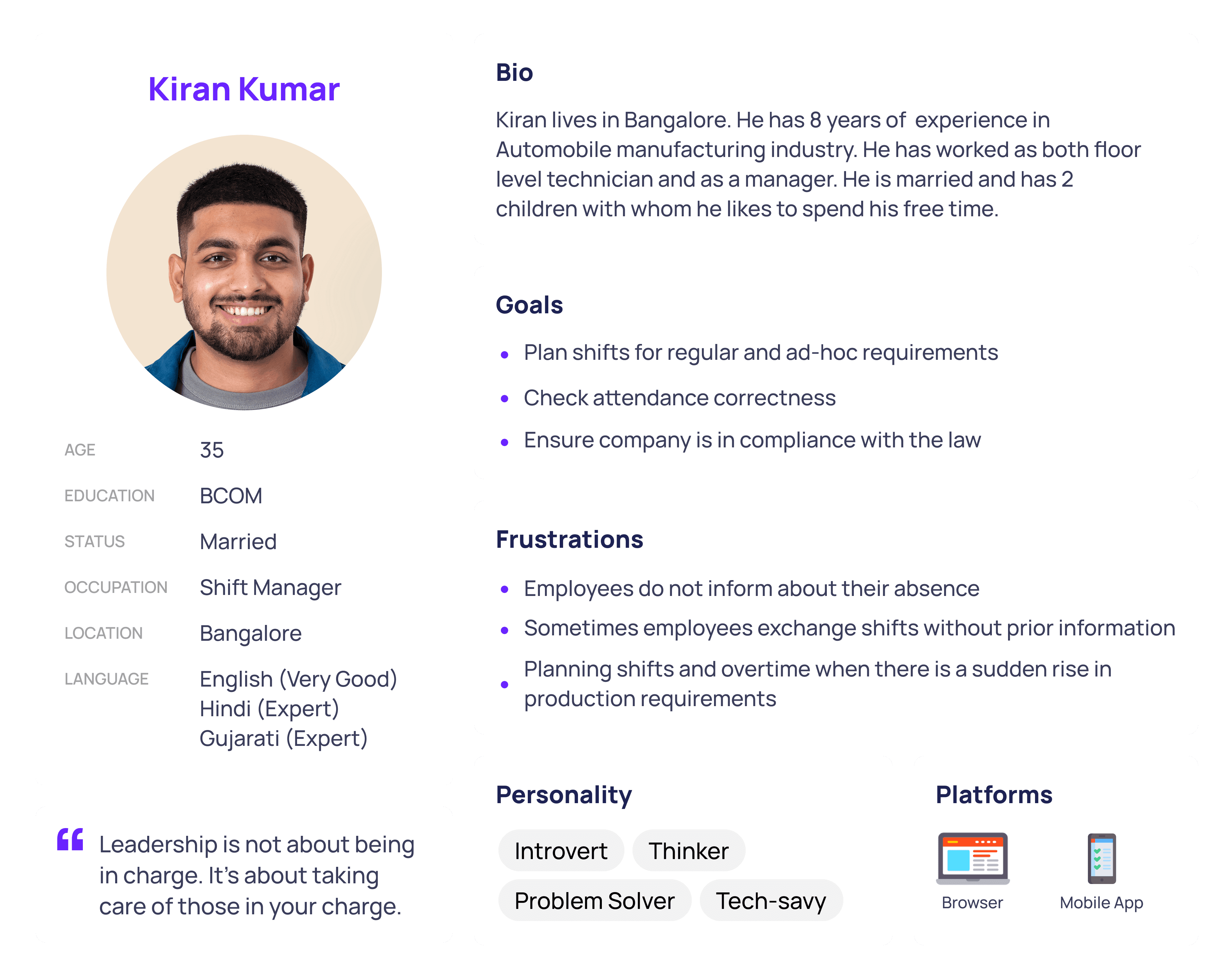
Persona: Shift Manager
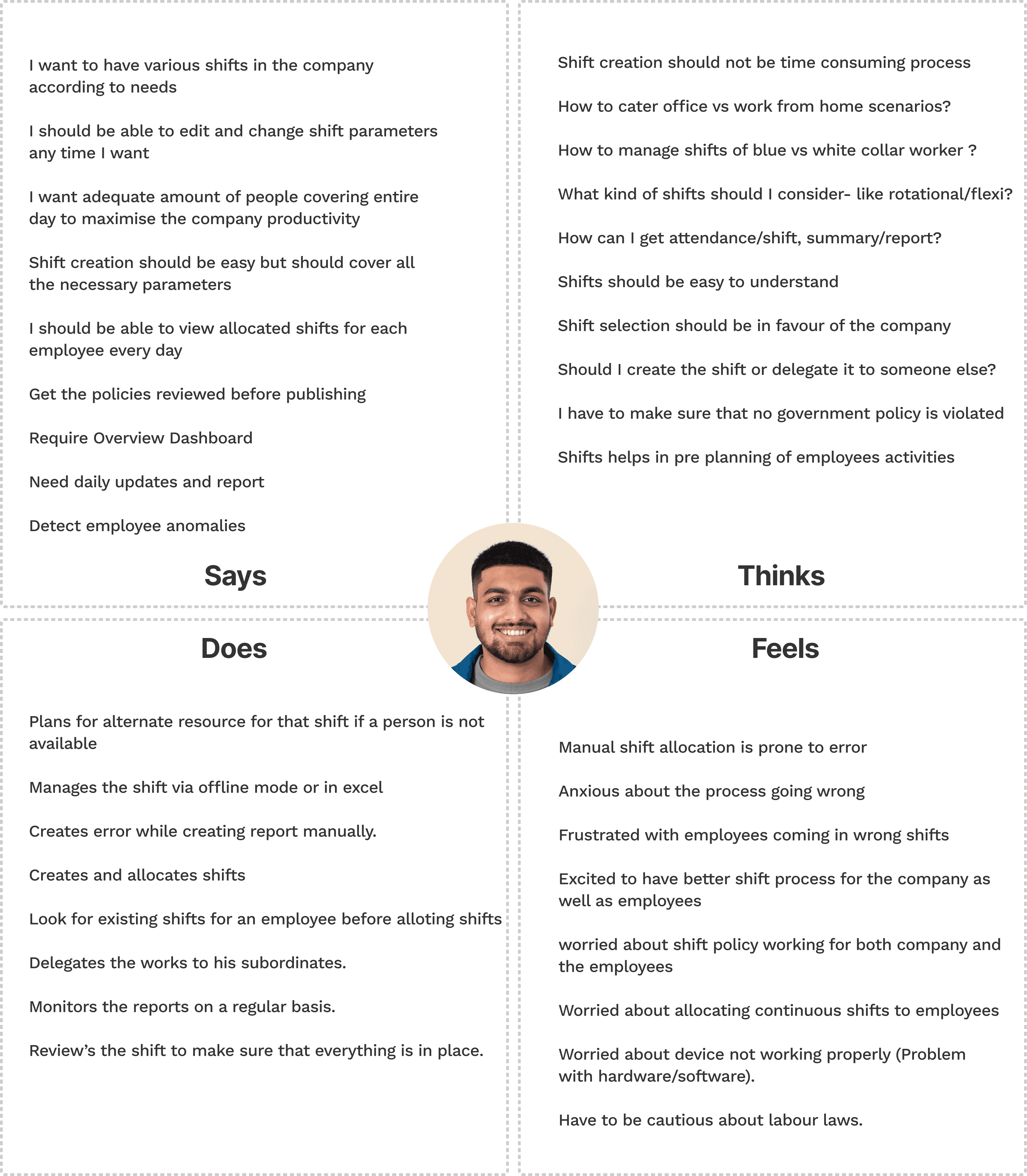
Empathy Map
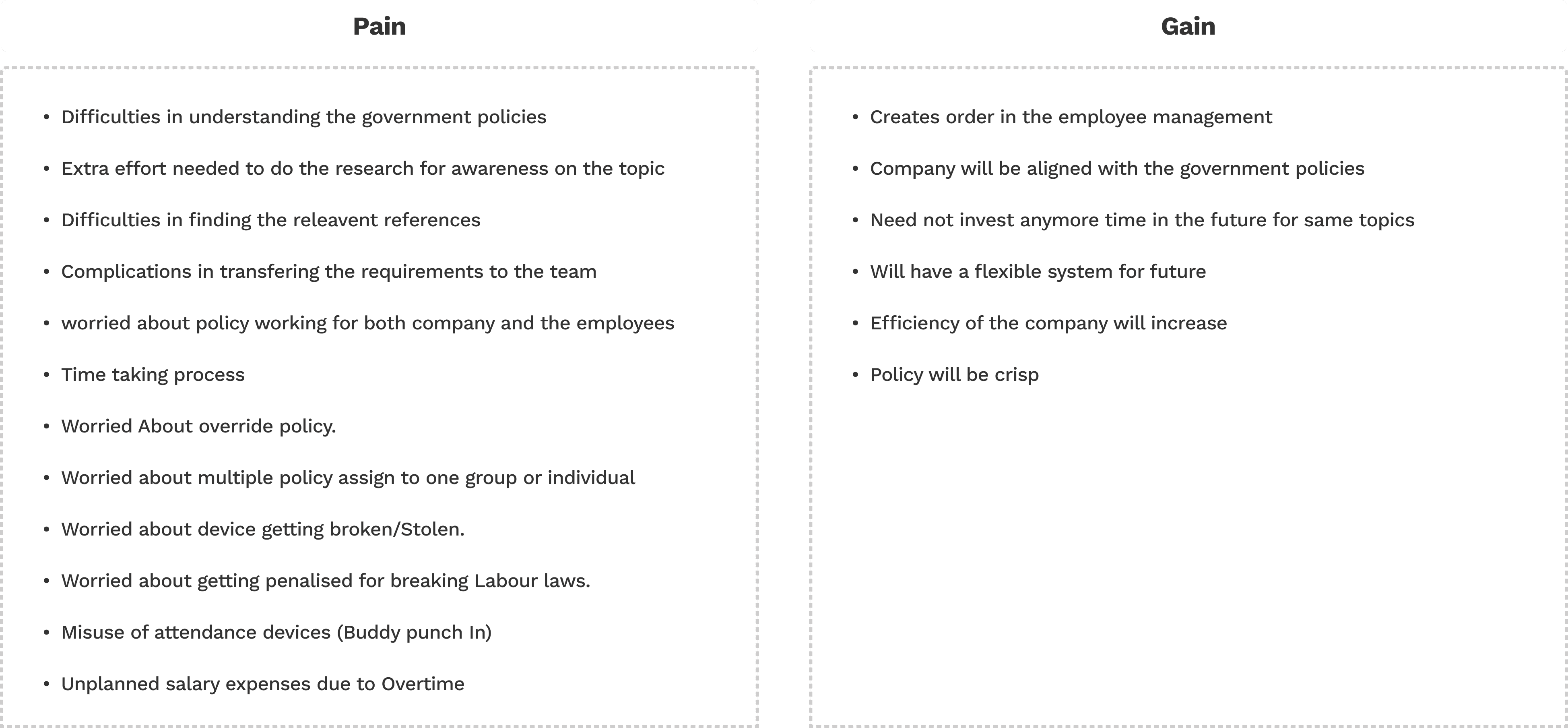
Key Solutions
Smart Shift Assignments
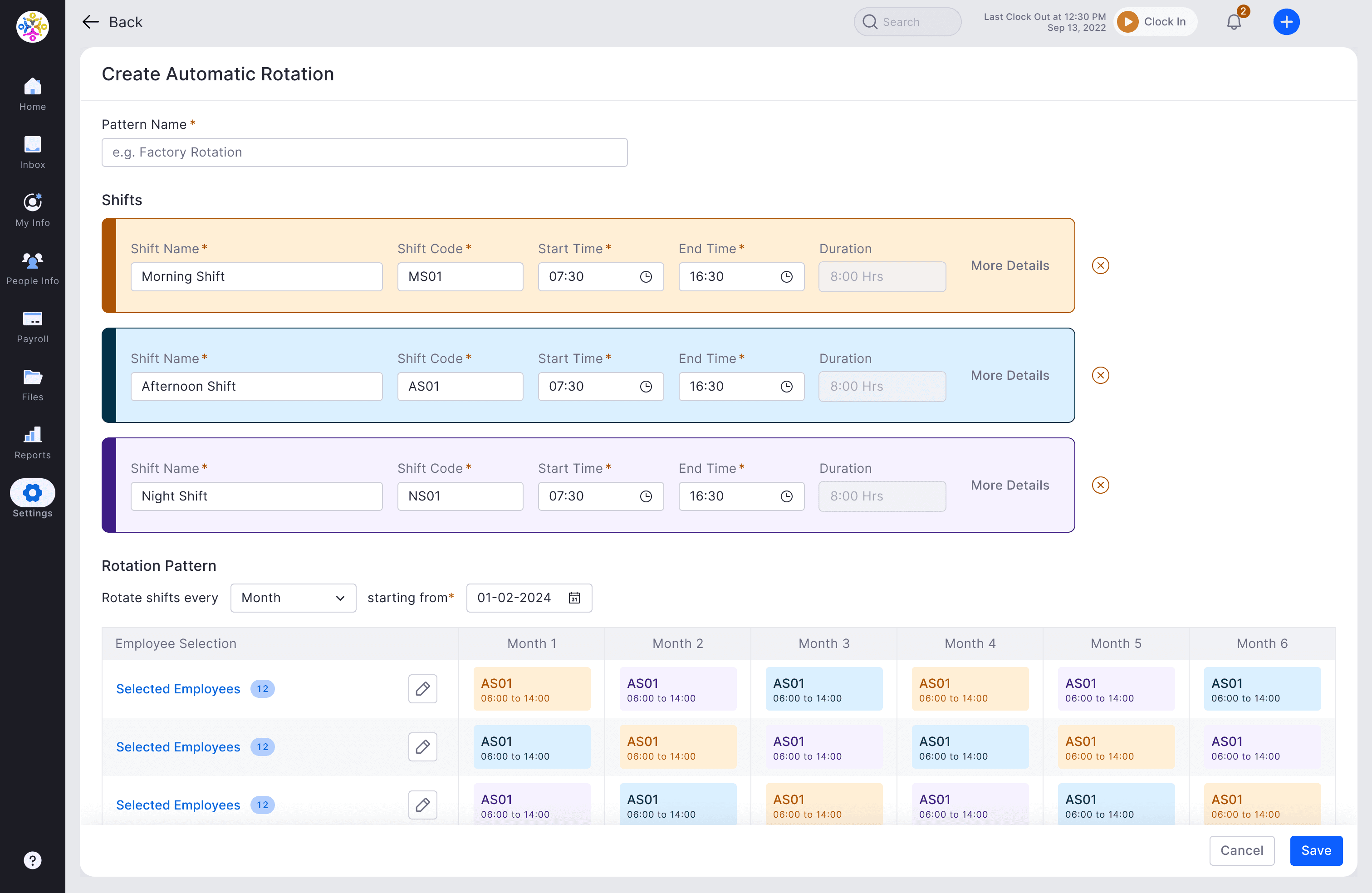
Customizable shift patterns for Rotational, Flexible, Fixed shifts
Dynamic Shift Scheduler
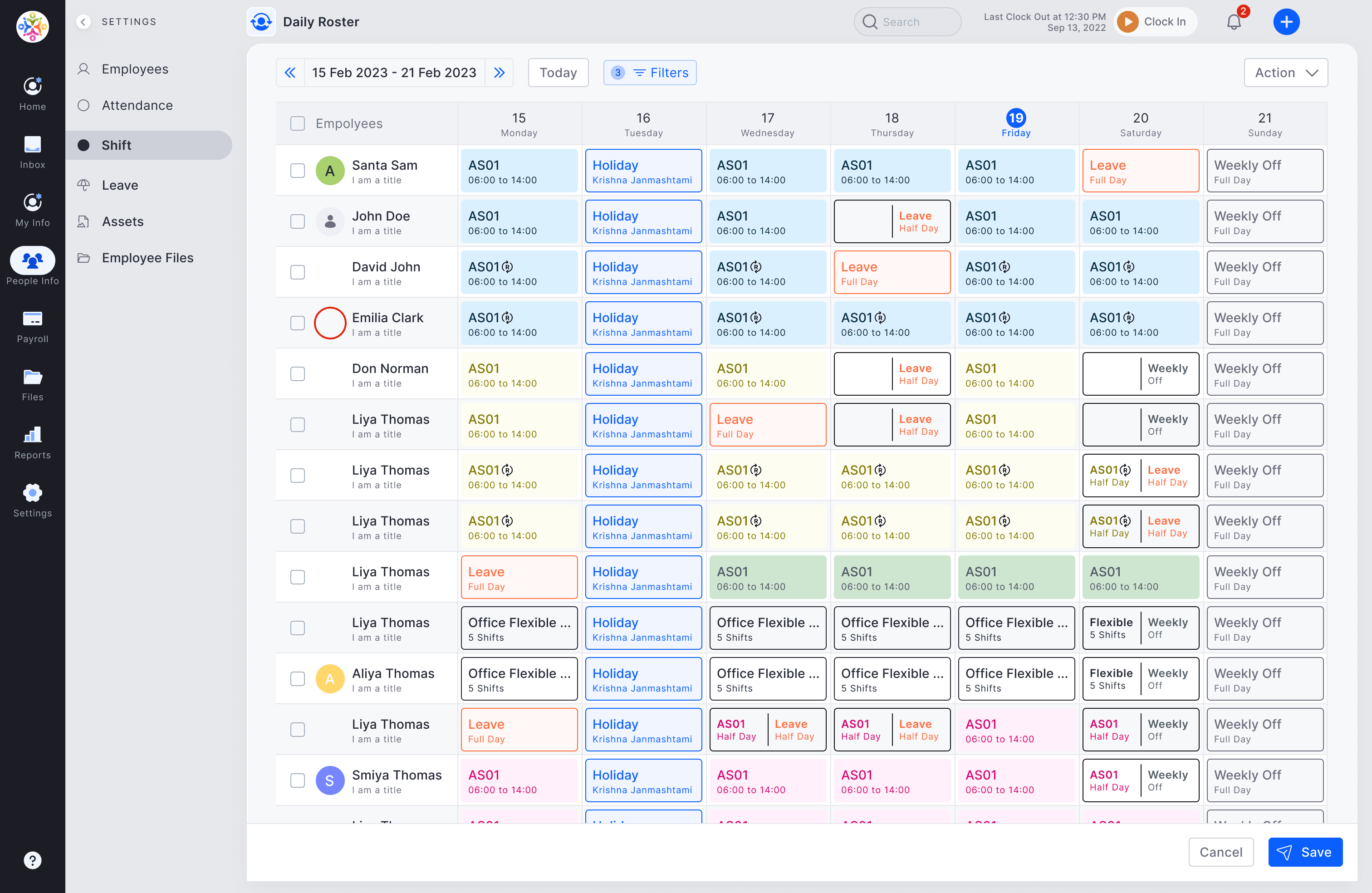
Excel-like shift scheduler to match the user’s learning.
Real-Time Alerts
Notifications for shift changes (e.g., late logins, grace time breaches).
ESS Portal
Visibility of shifts for employees to plan better.
Compliance Checker
Auto-validation against labor laws and government policies.
User Flow
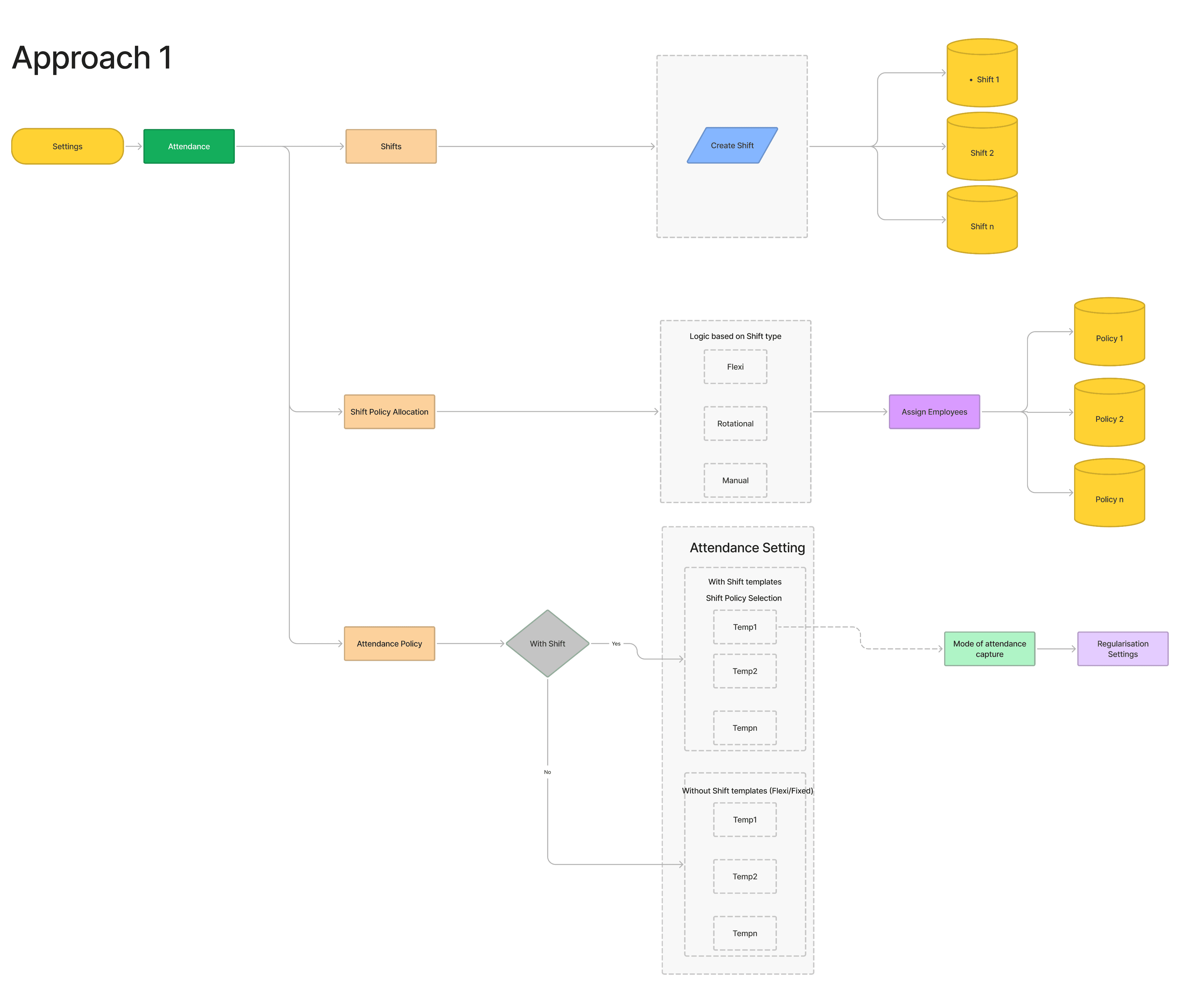
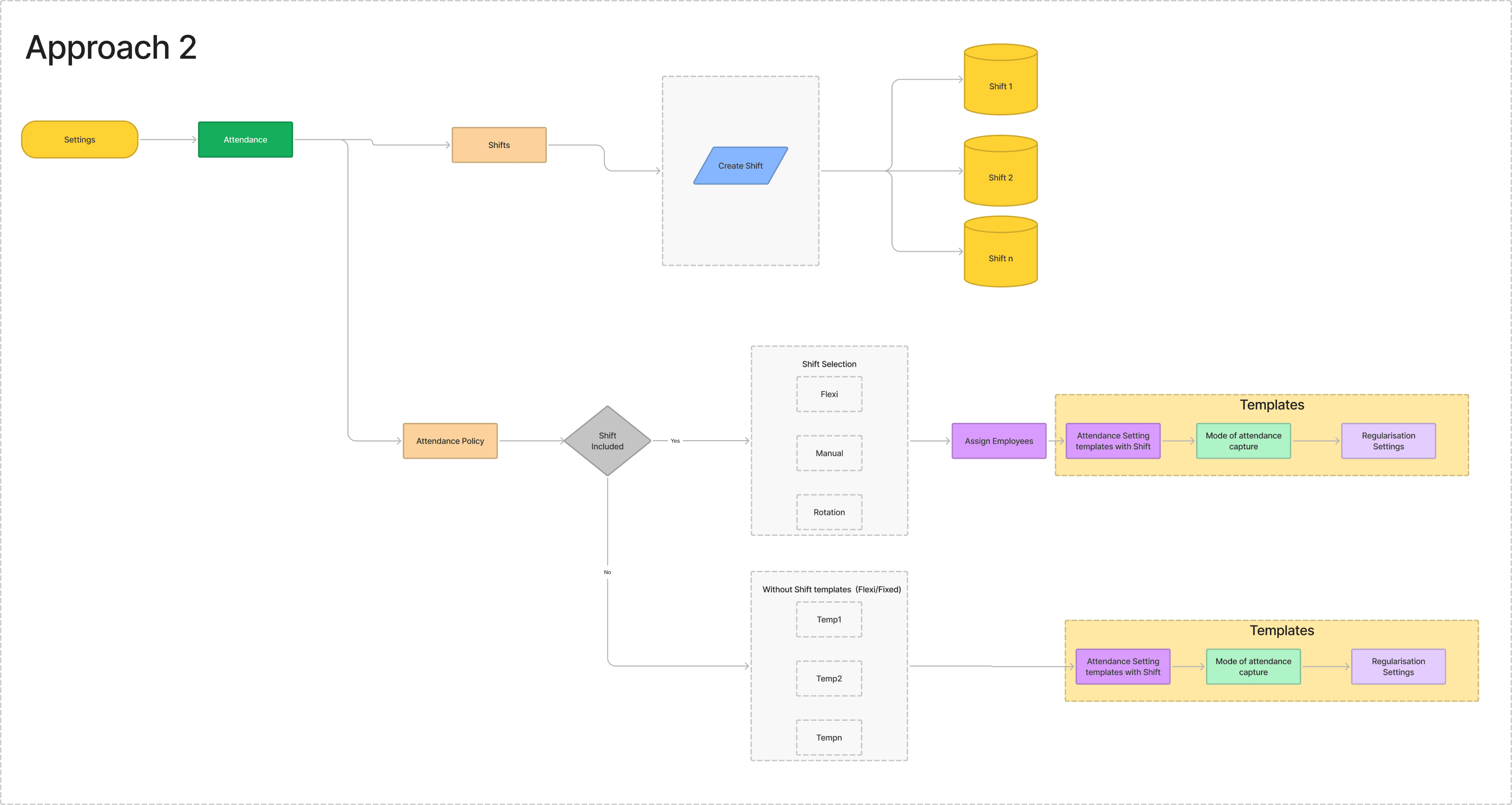
Usability Testing (Formative)
We conducted two rounds of moderated usability testing with 6 participants (3 HR managers and 3 employees) using the Figma prototype.
What We Tested
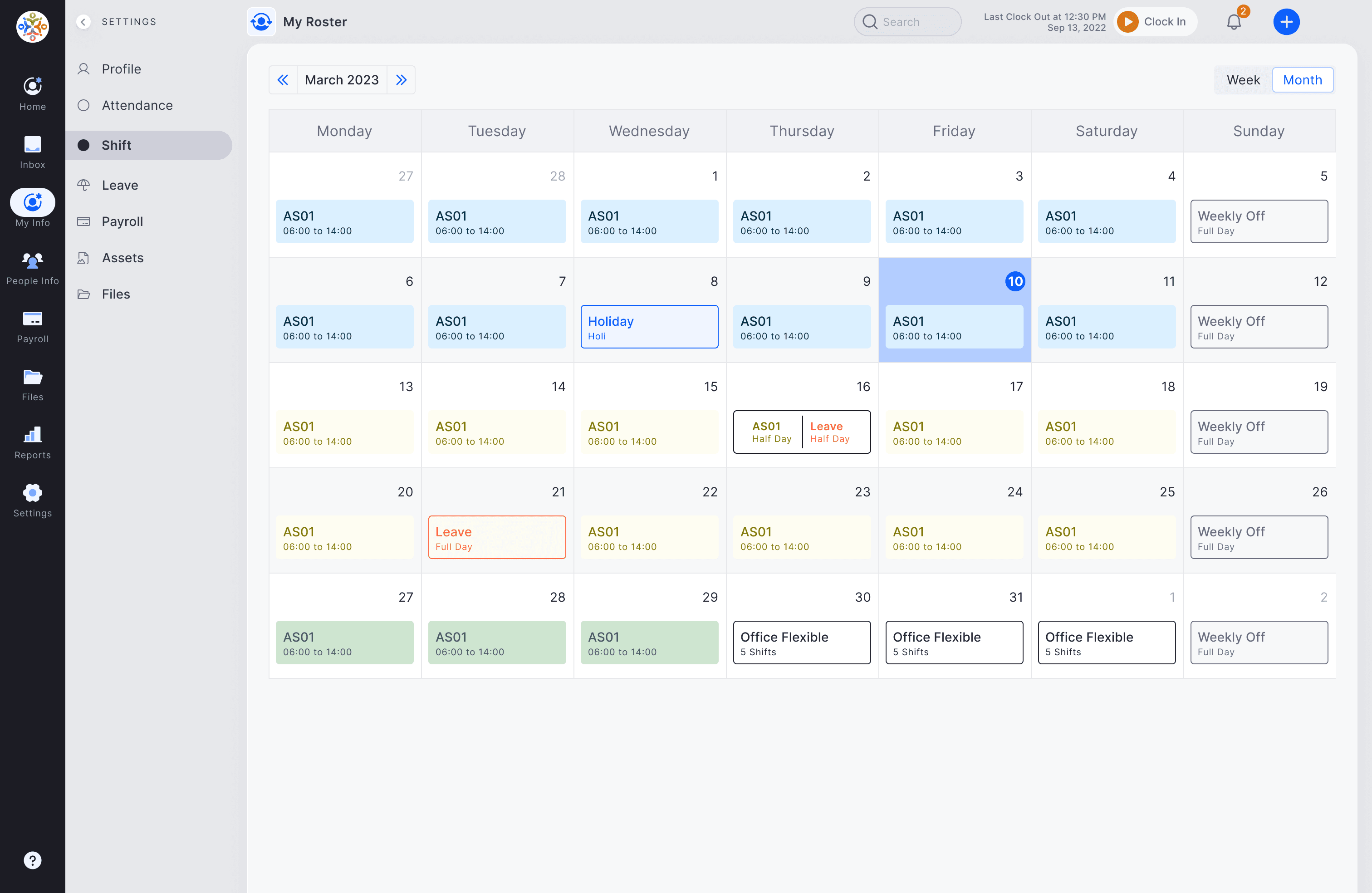
Creating/editing a shift in the settings page
Viewing personal shift calendar (employee portal)
Changing a shift in the scheduler
Notifying the employee about a shift change
Key Learnings
HRs appreciated the spreadsheet-like interface but requested inline edit options.
Employees wanted clearer icons for rotating shifts and their schedule details in mobile app.
Alerts were seen as helpful but too frequent—revised to batch notifications.
Changes Made
Added inline editing to shift cells
Prioritized employee scheduler in mobile app
Grouped system alerts into digest summaries
Developer Handoff
Once the final designs were validated, I collaborated with the engineering team to ensure a smooth and effective handoff.
Handoff Tools & Process
Used Figma’s Dev Mode and tokens for spacing, colors, and component specs.
Created a UI kit + design documentation page (Figma + Confluence).
Walked through user flows, edge cases, and interactions with developers in a live session.
Post-Launch Support
Monitored early adoption data and feedback via product analytics and HR feedback.
Provided quick fixes for label inconsistencies and mobile responsiveness.
Collaborated with PM to log enhancements for the next sprint
Results and Impact
30%
Faster shift creation
40%
Reduction in manual error
25%
Improvement in shift satisfaction
Conclusion
Challenges
Balancing flexibility for HR with simplicity for employees was tricky.
Ensuring legal compliance dynamically required detailed labor law research.
What I Learned
Shift management is not just about scheduling — it’s deeply tied to employee well-being and operational trust.
Empathy-driven design can dramatically reduce anxiety around complex processes.
Next Steps
Integrate AI-powered shift recommendations based on workload patterns.
Provision for users to raise a shift swap request.
Create an integrated calendar with other modules.